Advancements in Motorcycle Safety Features: A Comprehensive Overview
The motorcycle industry has experienced significant technological advancements over the past few decades, especially in the realm of safety features. As more riders take to the roads, the demand for improved safety measures has driven innovation, resulting in cutting-edge technologies designed to protect riders and enhance their riding experience. In this comprehensive overview, we delve into the latest advancements in motorcycle safety features, exploring how these innovations are reshaping the industry.
The Evolution of Motorcycle Safety
Motorcycles have always been synonymous with freedom and adventure, but they also come with inherent risks. Early motorcycles were devoid of any advanced safety features, relying solely on the riders’ skills and protective gear. Over time, safety became a focal point as manufacturers began to incorporate technologies aimed at reducing the risk of accidents and injuries.
Today, motorcycle safety has evolved far beyond the basic helmet and protective clothing. Modern motorcycles come equipped with a suite of advanced features that work together to provide a safer riding experience. From anti-lock braking systems (ABS) to advanced rider-assistance systems (ARAS), the evolution of motorcycle safety continues to make strides.
Anti-Lock Braking Systems (ABS)
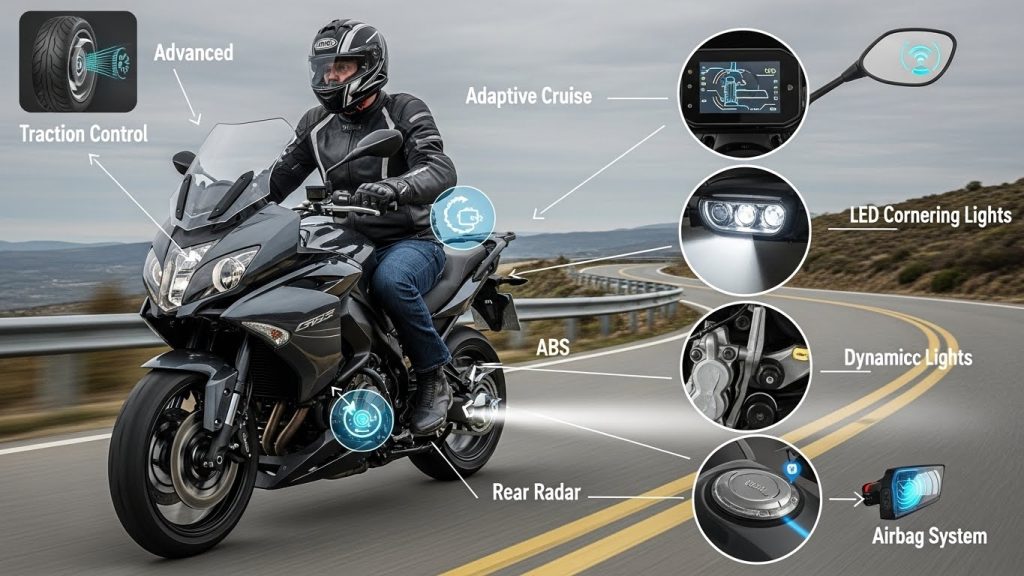
One of the most significant advancements in motorcycle safety is the widespread adoption of anti-lock braking systems (ABS). ABS prevents the wheels from locking up during braking, allowing the rider to maintain control and reduce stopping distances. This technology is particularly beneficial in wet or slippery conditions, where the risk of skidding is high.

A study conducted by the National Highway Traffic Safety Administration (NHTSA) found that motorcycles equipped with ABS are 31% less likely to be involved in fatal crashes compared to those without. As a result, many countries have made ABS a mandatory feature on new motorcycles, underscoring its importance in enhancing rider safety.
Advanced Rider-Assistance Systems (ARAS)
Advanced rider-assistance systems (ARAS) are a suite of electronic technologies designed to assist riders and improve overall safety. These systems leverage sensors, cameras, and other advanced technologies to provide real-time information and support to the rider.
Traction Control
Traction control systems (TCS) are designed to prevent wheel slip during acceleration by automatically adjusting the power delivery to the wheels. This system is particularly useful in preventing loss of control on slippery surfaces or during aggressive riding. By maintaining optimal traction, TCS helps riders navigate challenging conditions safely.
Blind Spot Detection
Blind spot detection is another valuable ARAS feature that enhances rider safety. Using radar or camera systems, blind spot detection alerts riders to vehicles in their blind spots, reducing the risk of collisions during lane changes. This technology has become increasingly popular in modern motorcycles, offering riders an additional layer of situational awareness.
Adaptive Cruise Control
Adaptive cruise control is a sophisticated system that automatically adjusts the motorcycle’s speed to maintain a safe distance from the vehicle ahead. Utilizing radar technology, this system enhances comfort and safety during long rides by reducing the need for constant speed adjustments.
Connected Technology and Smart Helmets
The integration of connected technology and smart helmets represents a new frontier in motorcycle safety. These innovations leverage the power of connectivity to provide riders with real-time data and enhanced communication capabilities.
Smart helmets equipped with heads-up displays (HUD) can project essential information such as speed, navigation, and incoming calls directly onto the visor, allowing riders to stay informed without taking their eyes off the road. Moreover, smart helmets often include built-in communication systems, enabling seamless communication with other riders or emergency services.
The rise of connected technology also extends to motorcycles themselves. Many modern bikes are equipped with integrated systems that provide real-time diagnostics, maintenance alerts, and even emergency crash detection. By connecting riders to their machines and the broader digital ecosystem, these technologies significantly enhance safety and convenience.
Airbag Systems
Airbag systems, once exclusive to automobiles, have made their way into the motorcycle industry. Companies like Alpinestars and Dainese have developed wearable airbag vests that deploy upon detecting a crash, providing crucial protection to the rider’s upper body.
These airbag systems utilize advanced sensors to monitor the rider’s movements and detect potential accidents. In the event of a crash, the airbags inflate within milliseconds, cushioning the rider and reducing the risk of severe injuries. The effectiveness of these systems has been demonstrated in various studies, showcasing their potential to save lives.
For more detailed insights into the effectiveness of motorcycle airbag systems, check out resources from the Insurance Institute for Highway Safety (IIHS).
Conclusion: The Future of Motorcycle Safety
As the motorcycle industry continues to innovate, the future of motorcycle safety looks promising. The integration of advanced technologies and safety features is transforming the riding experience, offering unprecedented levels of protection and convenience. From anti-lock braking systems to smart helmets and airbag vests, each advancement contributes to a safer and more enjoyable ride.
Looking ahead, we can expect further developments in autonomous technology, enhanced connectivity, and even more sophisticated rider-assistance systems. As these innovations continue to evolve, the ultimate goal remains the same: to ensure that every rider can enjoy the thrill of the open road with confidence and peace of mind.
For those interested in learning more about the latest trends in motorcycle safety, resources from organizations like the Motorcycle Safety Foundation (MSF) provide valuable information and insights. By staying informed and embracing these advancements, riders can take full advantage of the technologies that are revolutionizing motorcycle safety.
Innovations in Rider Training and Education
While technological advancements play a crucial role in enhancing motorcycle safety, rider training and education remain fundamental components in promoting safer riding practices. The integration of modern technology into rider training programs has led to more effective and engaging learning experiences.
Virtual Reality (VR) Training
Virtual reality (VR) is revolutionizing the way new and experienced riders are trained. VR training programs offer immersive environments where riders can practice and refine their skills in a controlled, risk-free setting. These programs simulate various riding scenarios, from urban traffic to challenging weather conditions, allowing riders to develop their abilities and confidence before hitting the road.
Moreover, VR training enables riders to experience and react to potential hazards, teaching them how to make quick decisions in real-time. Organizations such as the Road Safety Authority are exploring VR as a tool to enhance road safety education, underscoring its potential to transform rider training.
Online Learning Platforms
Online learning platforms have also emerged as valuable resources for motorcycle safety education. These platforms offer a wide range of courses, covering topics such as defensive riding, advanced maneuvers, and motorcycle maintenance. Riders can access these courses from anywhere, making it easy to continue their education and stay updated on the latest safety practices.
The flexibility and accessibility of online learning empower riders to take control of their education and improve their skills at their own pace. This self-directed approach encourages continuous learning, fostering a culture of safety and responsibility within the riding community.
Impact of Legislation and Industry Standards
Legislation and industry standards have a significant influence on the adoption and development of motorcycle safety features. Governments worldwide are recognizing the importance of safety innovations and are implementing regulations to ensure that new motorcycles meet stringent safety criteria.
For instance, the European Union has mandated the inclusion of ABS on all new motorcycles above a certain engine size, highlighting the role of regulatory bodies in promoting safety advancements. Similarly, organizations such as the Federation of European Motorcyclists’ Associations (FEMA) advocate for rider safety and actively participate in shaping policies that impact the motorcycle industry.
By setting high standards and encouraging the adoption of proven safety technologies, legislation helps drive innovation and ensures that manufacturers prioritize rider safety in their designs.
The Role of Manufacturers and Collaboration
Manufacturers play a pivotal role in the development and implementation of motorcycle safety features. Leading companies invest heavily in research and development to create innovative solutions that enhance rider safety. Collaborations between manufacturers, technology companies, and research institutions are also fostering the exchange of ideas and accelerating the pace of innovation.
For example, partnerships between motorcycle manufacturers and tech firms have led to the integration of artificial intelligence (AI) in safety systems. AI-powered systems can analyze rider behavior and environmental data to predict potential risks and provide real-time feedback to the rider. These collaborative efforts are crucial in pushing the boundaries of what’s possible in motorcycle safety.
Community Engagement and Rider Advocacy
The motorcycle community itself plays an essential role in promoting safety and advocating for advancements in safety technologies. Rider groups and organizations actively engage in safety campaigns, raising awareness about the importance of protective gear, safe riding practices, and the benefits of modern safety features.
By fostering a culture of safety and responsibility, the motorcycle community contributes to reducing accidents and injuries. Initiatives such as group rides, safety workshops, and awareness rallies provide platforms for riders to share experiences and learn from one another, creating a supportive and informed community.
Conclusion: A Collaborative Effort for a Safer Future
The journey toward improved motorcycle safety is a collaborative effort that involves manufacturers, regulatory bodies, educational institutions, and the riding community. Each stakeholder plays a vital role in advancing safety technologies and practices, contributing to a safer and more enjoyable riding experience for all.
As we look to the future, the continued integration of technology, innovative training methods, and robust legislation will be key drivers in reducing motorcycle-related accidents and fatalities. By embracing these advancements and fostering a culture of safety, we can ensure that the thrill of motorcycling remains an accessible and safe pursuit for generations to come.
For those committed to advocating for motorcycle safety, resources and support from organizations like the RideApart community offer valuable insights and opportunities to get involved. Together, we can make significant strides in enhancing motorcycle safety and creating a brighter future for riders worldwide.
About the Author