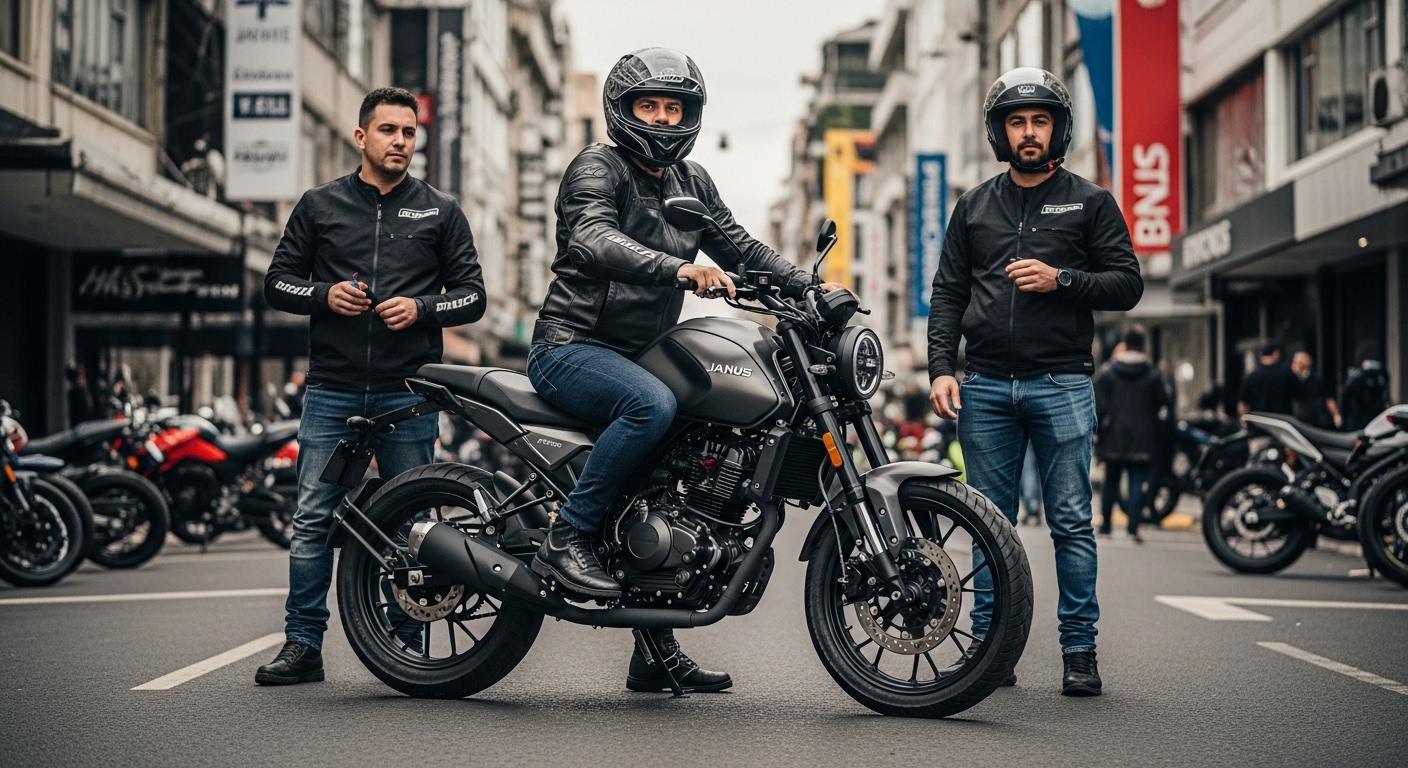
Janus-style retro motorcycle in a Brazilian city street, symbolizing Brazil market entry.
Updated: April 9, 2026
harley-davidson Motorcycles Brazil sits at a crossroads of culture, mobility needs, and macroeconomic shifts that shape how riders choose, customize, and maintain their machines across the nation. This analysis steps back from press releases to map the forces that determine Harley’s standing in a market where prestige, pragmatism, and price collide. We look at brand positioning, distribution networks, and a regulatory environment that can tilt ownership costs, service access, and resale value. By framing Brazil’s motorcycle scene as a convergence of urban mobility and regional identity, we can see where Harley might win sustainable shares and where it may concede ground to models better suited to Brazilian lanes and budgets.
Market Diagnosis: Demand, Supply, and Brand Positioning
Across Brazil, the motorcycle market remains a bridge between affordability and aspiration. Demand among urban commuters and younger riders coexists with a persistent appetite for iconic brands that offer lifestyle signaling. harley-davidson Motorcycles Brazil’s presence in this mix leans on heritage, experiential retail, and dealer networks that emphasize ride experiences as much as warranty coverage. The critical questions for Harley aren’t only about engine displacement or horsepower, but about total ownership experience in a country where maintenance costs and spare parts availability can determine whether a customer becomes a repeat buyer or a one-time symbol.
On the supply side, the distributor network and aftersales capacity bound Harley to a national footprint. Retail density tends to be higher in southern and southeastern states, where disposable income and a mature chain of parts suppliers support premium ownership. In more distant states, riders face longer service intervals, parts lead times, and higher travel costs to reach authorized centers. In this environment, the brand’s ability to offer financing options, predictable maintenance plans, and a steady parts pipeline influences long-term loyalty far more than glossy advertising alone.
Dealer Networks and Aftermarket Ecosystems
Harley’s authorized dealers in Brazil serve as both sales channels and service hubs, but the broader aftermarket plays a pivotal role in shaping ownership culture. Local workshops and chrome shops contribute to the brand’s customization ethos—an important driver of social signaling in Harley ownership. For many riders, the decision to purchase hinges not only on the bike but on proximity to skilled technicians, access to OEM parts, and confidence in warranty coverage when a custom component is installed. The most resilient strategies link dealer support with a vibrant ecosystem of independent mod shops, ensuring that styling and comfort upgrades remain affordable and available across the country’s diverse geographies.
In metropolitan hubs, new-bike sales flow into well-established service slots; in regional towns, riders often combine factory-backed maintenance with trusted local mechanics. The outcome is a hybrid ecosystem: brand promises backed by adaptable, on-the-ground networks. Harley’s challenge is to maintain standardized service quality while allowing room for local customization traditions that define the brand’s appeal in Brazil.
Policy and Urban Mobility Context
Policy context matters because total cost of ownership for motorcycles in Brazil is sensitive to taxation, licensing requirements, and safety standards. Import duties and currency movements influence sticker prices for premium bikes, while local content rules and assembly incentives can alter the economics of bringing models to market. Safety regulations, helmet mandates, and emission controls shape the operating environment for all brands, but premium cruisers often encounter a steeper compliance curve when it comes to warranty conditions and parts availability. In cities facing congestion, motorcycles are praised for efficiency yet still subject to city-level bans or restrictions that affect the practical appeal of owning a larger cruiser.
Beyond taxes, financing structures and dealer financing partnerships can tilt ownership decisions. When banks and consumer credit providers offer affordable installment plans, riders are better positioned to justify the premium badge. Conversely, a tightening credit cycle or higher interest rates can compress the window of affordability for aspirational models, elevating the importance of used-bike markets and certified pre-owned programs.
Future Scenarios for Harley-Davidson in Brazil
Looking ahead, four plausible paths could shape Harley-Davidson’s trajectory in Brazil. First, incremental growth in major metropolitan areas, driven by expanded dealer footprints, more robust maintenance networks, and flexible financing that lowers the barrier to entry for first-time riders. Second, a localized model strategy that prioritizes smaller-displacement machines with contemporary styling cues and Brazilian-market pricing, potentially accompanied by regional assembly to suppress import costs. Third, strengthened partnerships with insurers and ride clubs to support data-driven ownership experiences—riding clubs and events can serve as organic marketing channels that translate into community growth and brand loyalty. Fourth, intensified collaboration with Brazilian suppliers on parts and accessories to shorten lead times and deepen customization options while preserving warranty integrity.
In this mix of scenarios, Harley-Davidson Brazil could balance aspirational branding with pragmatic affordability by combining localization, financing, and community-building. The risk is underinvestment in regional networks or a too-narrow product span that fails to capture differing rider profiles across the country. If the brand negotiates these tensions successfully, it could sustain a niche of premium, culturally resonant motorcycles while supplementing its lineup with accessible variants that broaden its reach.
Actionable Takeaways
- Develop a localized mid-displacement lineup (approx. 250-500cc) paired with competitive financing to appeal to a broader Brazilian audience.
- Expand regional dealer networks and service centers, prioritizing parts availability and warranty coverage in states outside the major urban centers.
- Offer bundled maintenance plans and flexible ownership options to reduce lifetime ownership costs and build loyalty among first-time Harley buyers.
- Invest in Brazilian rider communities and events, leveraging clubs, rides, and social channels to reinforce brand affinity and word-of-mouth growth.
- Strengthen parts supply chains with local suppliers where feasible to shorten lead times and support customization without undermining reliability.
Source Context
Actionable Takeaways
- Track official updates and trusted local reporting.
- Compare at least two independent sources before sharing claims.
- Review short-term risk, opportunity, and timing before acting.