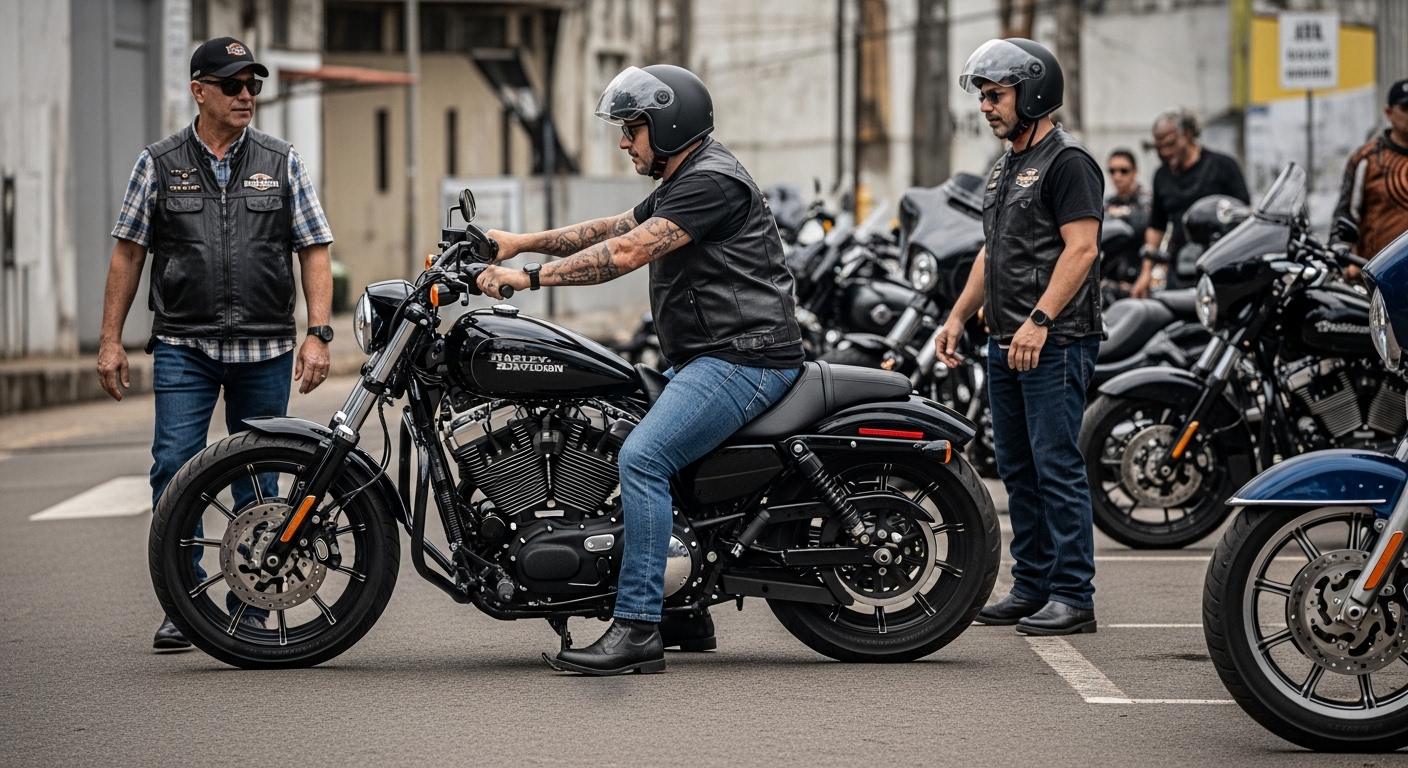
Harley-Davidson motorcycle with Brazilian urban backdrop
Updated: April 9, 2026
In Brazil, the motorcycle Motorcycles Brazil landscape is navigating a period of shift, where clubs, riders, and policymakers intersect to shape urban mobility and culture across the country. This analysis examines how market forces, safety standards, and community structures interact to define the road ahead for riders and the clubs that organize them.
Market pulse and rider demographics
Brazil’s two-wheeled economy has long served as a lifeline for workers in sprawling urban centers and remote towns alike. In recent years, the convergence of rising urban density, ferrying demands from gig platforms, and a robust aftermarket motorcycle culture has intensified the role of clubs as both social networks and practical support systems for riders.
Riders tend to cluster in major metros where lanes, parking, and service networks are most developed, yet there is a growing presence in secondary cities as delivery workloads expand and the cost of car ownership remains high. This has produced a diverse rider profile: veterans who treat clubs as a framework for safety and camaraderie, and new entrants who are drawn by customization, speed, and the social capital of affiliation.
Policy, credit conditions, and local schooling also shape purchase patterns. With financing becoming more accessible yet subject to macroeconomic twists, buyers weigh total cost of ownership against maintenance reliability and resale value—factors that ultimately influence what models circulate in club parades and street gatherings.
Policy shifts, safety, and infrastructure
Safety and infrastructure have emerged as governing factors for Brazil’s motorcycle communities. Helmet mandates, licensing procedures, and age restrictions interact with city-level design choices—such as protected lanes, curbside parking allocations, and traffic signal prioritization—to determine how freely riders can move and how quickly clubs can organize events without disruption.
Local authorities increasingly view motorcycles as both a traffic solution and a potential risk, prompting pilots that expand rider education and enforce compliance with standards. In clubs, safety becomes a shared responsibility, with mentors teaching group riding etiquette, pre-ride checks, and emergency planning. The result is a gradual shift toward more structured club activities that balance tradition with measurable risk management.
Tech and culture: bikes, clubs, events in Brazil
The Brazilian motorcycle scene sits at the intersection of craft, performance, and community. Customization remains a central language—riders curate exhaust notes, paint jobs, and chassis settings as a form of self-expression and identity within the club network. At the same time, suppliers and workshops increasingly offer upgrades geared toward durability and fuel efficiency, reflecting broader economic realities that favor cost-conscious upgrades over high-profile spec sheets.
Events and meetups—ranging from informal rides to formal rallies—function as both social glue and market signals. For many, these gatherings are where knowledge is exchanged, mentors are found, and new riders are inducted into the etiquette and responsibilities of the sport. The rise of electric and hybrid models also introduces a transitional moment, challenging clubs to adapt maintenance regimes, charging infrastructure, and rider training to new propulsion tech.
Global signals and local implications
Global production trends and international competition shape what Brazilian riders see at the showroom. Manufacturers adapting to regional demand are more likely to tailor entry-level options, service networks, and warranty terms for the Brazilian market. For clubs, global momentum toward safer riding practices and data-driven risk assessment translates into standardized guidelines that can be taught within local chapters, while still preserving regional flavors of camaraderie and spectacle.
In this context, local policy experiments, such as dedicated lanes for motorcycles or incentives for licensing renewals, can have outsized effects on club vitality and rider safety. Observers watching the Brazilian market should consider not only the price and power of the bikes on the street but also the social infrastructure—training, mentorship, and event culture—that sustains a healthy riding community.
Actionable Takeaways
- Invest in safety-focused club programs: formal rider training, helmet compliance, and pre-ride check routines to reduce incident rates and build trust with local authorities.
- Develop data-backed road-hazard mapping within clubs to inform infrastructure debates and guide member compliance with traffic laws.
- Advocate for targeted infrastructure: protected motorcycle lanes, improved signage, and smart signaling to improve flow and reduce conflicts with other road users.
- Foster youth engagement and local mentorship to sustain the culture while widening participation beyond traditional peer groups.
- Explore electric and hybrid options with practical support: charging access, maintenance training, and affordable insurance to ensure a gradual, sustainable transition for clubs and members.