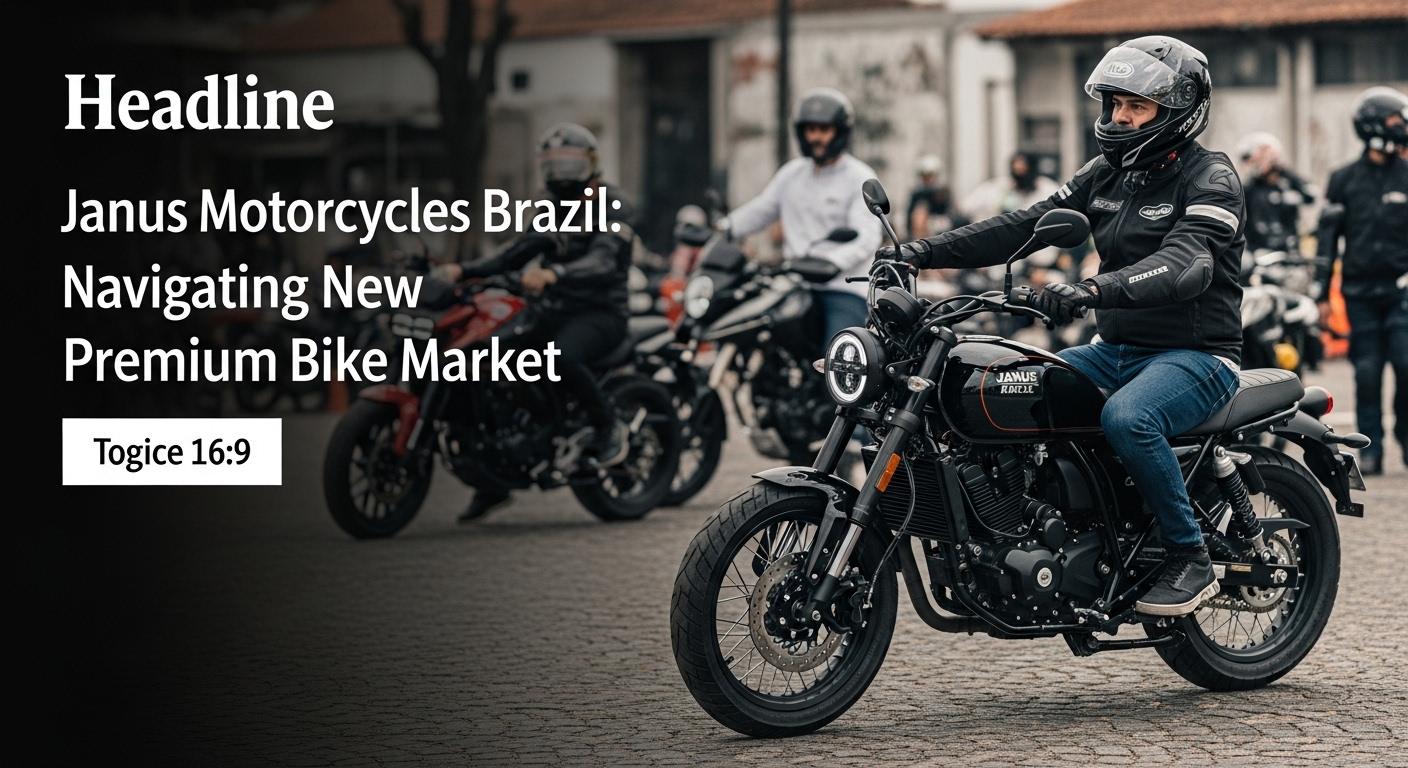
Janus motorcycle in a Brazilian urban street scene
Updated: April 9, 2026
raptee Motorcycles Brazil arrives in a country wrestling with urban congestion and a growing appetite for cleaner transport, and this analysis for Brazil’s motorcycling audience examines what a new entrant powered by an electric platform might mean for pricing, usage, and infrastructure.
Market Context and Potential
Brazil remains one of the world’s largest motorcycle markets, where two-wheeled transport is deeply embedded in daily life. Riders seek affordable, reliable mobility for dense urban cores and expanding peri-urban corridors. An electric entrant that can convert energy efficiency into lower total cost of ownership could appeal to riders who are sensitive to upfront price, maintenance, and fuel volatility. The opportunity is not only in consumer bikes for urban commuting but also in light commercial fleets such as courier and service deliveries, where predictable electricity costs and reduced tailpipe emissions translate into distinct savings over the vehicle’s life.
Drawing on the Indian market experience of rappee Motorcycles Brazil’s potential trajectory offers a usable framework for executives and policymakers. In India, a scale-focused approach to the HV platform and a careful packaging of local content, aftersales, and transparent warranty terms helped reduce perceived risk for buyers. In Brazil, similar dynamics could emerge if the supply chain can align with local import duties, currency prudence, and a clear path to service networks. Yet the Brazilian context also presents unique challenges: higher import duties on complete motorcycles, regional variation in electricity pricing, and the need to co-invest in charging infrastructure and rider education to overcome early adopter frictions.
Technology, Manufacturing, and Supply Chains
The core proposition behind rappee Motorcycles Brazil would rest on an electric powertrain that prioritizes modularity, energy density, and reliability in hot tropical climates. A scalable battery architecture and a simplified service model could help minimize lifetime costs while delivering warranty-backed performance for daily commuting and last‑mile delivery. For Brazil, a central question will be whether the initial rollout emphasizes imported complete bikes or a CKD or SKD assembly strategy that can leverage local manufacturing incentives and the regional supplier ecosystem. The latter path reduces landed cost and aligns with the expectations of Brazilian regulators that favor local content, but it demands a robust supplier network for batteries and electronics and a training program for mechanics across multiple cities.
Beyond assembly, the battery supply chain will drive much of the price trajectory and reliability. International sourcing could face currency and logistics headwinds, while a domestic or regional battery partner would offer shorter lead times and easier warranty service. Climate resilience also matters: in Brazil’s heat and humidity, battery thermal management and protective enclosures become deciding factors in long-term performance. Should Raptee pursue a partnerships model with battery manufacturers or energy utilities, it could accelerate charging access while maintaining a competitive total cost of ownership for riders who ride daily and lean on charging at workplaces or homes.
Policy, Infrastructure, and Consumer Adoption
Policy signals at municipal, state, and federal levels will shape the speed of adoption. Brazil has a grid that, while increasingly capable, still faces bottlenecks in peak hours in large cities. Electric incentives, reduced import duties for components, and a clear policy pathway for EV riders could unlock faster uptake. In urban contexts, dedicated lanes, parking, and charging access influence the practicality of switching from petrol bikes. On the consumer side, total cost of ownership calculations will matter as much as sticker price. Flat electricity tariffs, access to affordable home charging, and predictable maintenance costs can tilt decisions toward adoption, especially among younger urban riders and delivery partners who prioritize reliability and uptime.
The education of riders and mechanics also matters. Trust grows when workshops confidently handle repairs, parts supply, and warranty claims. In parallel, partnerships with ride-hailing and courier fleets could anchor a demand base that justifies broader charging networks and standardized servicing. Brazil’s energy mix—strongly hydro-based—can translate into low marginal emissions during many hours of operation, reinforcing the environmental appeal of electric two-wheelers as cities push for cleaner air and quieter streets.
Competitive Landscape and Scenarios
Any entry by rappee Motorcycles Brazil will face a crowded field that includes established motorcycle manufacturers and a growing cadre of EV startups. Price, reliability, and aftersales will determine early market traction, while the ability to scale through local manufacturing and an expanding service network will influence long-run sustainability. In a possible scenario, an import-first approach targets urban riders with a premium but increasingly compelling total cost of ownership. In another path, collaboration with local manufacturers or battery partners could deliver competitive pricing through local content credits and faster service reach. A third scenario envisions partnerships with delivery platforms or fleet operators, using centralized charging hubs to drive utilization and demonstrate reliability at scale. Finally, a blended model that combines selective local assembly, targeted fleet contracts, and a modular charging network could provide flexibility as Brazil’s EV policies evolve.
Investors and policymakers should test these scenarios against practical milestones: securing reliable battery supply, building out service centers across major cities, and linking charging with renewable energy sources. The outcome will hinge on how quickly the ecosystem can deliver predictable ownership costs, dependable servicing, and trusted warranties in a market known for price sensitivity and varied urban infrastructure.
Actionable Takeaways
- Policymakers: craft clear, scalable EV incentives and streamlined import rules to reduce price barriers while encouraging local content where feasible.
- Investors: prioritize partnerships with battery suppliers and service networks to de-risk early market entry and enable rapid scaling.
- Manufacturers: design modular, climate-resilient platforms that minimize maintenance complexity and maximize uptime for urban riders and fleets.
- Riders and fleets: evaluate total cost of ownership, including charging costs and maintenance, and seek networks that assure reliability and predictable energy prices.
- Infrastructure players: invest in charging networks that accommodate urban density, workplace charging, and rapid top-ups for delivery operations.
Source Context
- Raptee HV accelerates electric motorcycle expansion across Indian markets – Devdiscourse
- Thailand safety alert on Pattaya risks – the traveler
- RushLane coverage – RushLane
Actionable Takeaways
- Track official updates and trusted local reporting.
- Compare at least two independent sources before sharing claims.
- Review short-term risk, opportunity, and timing before acting.