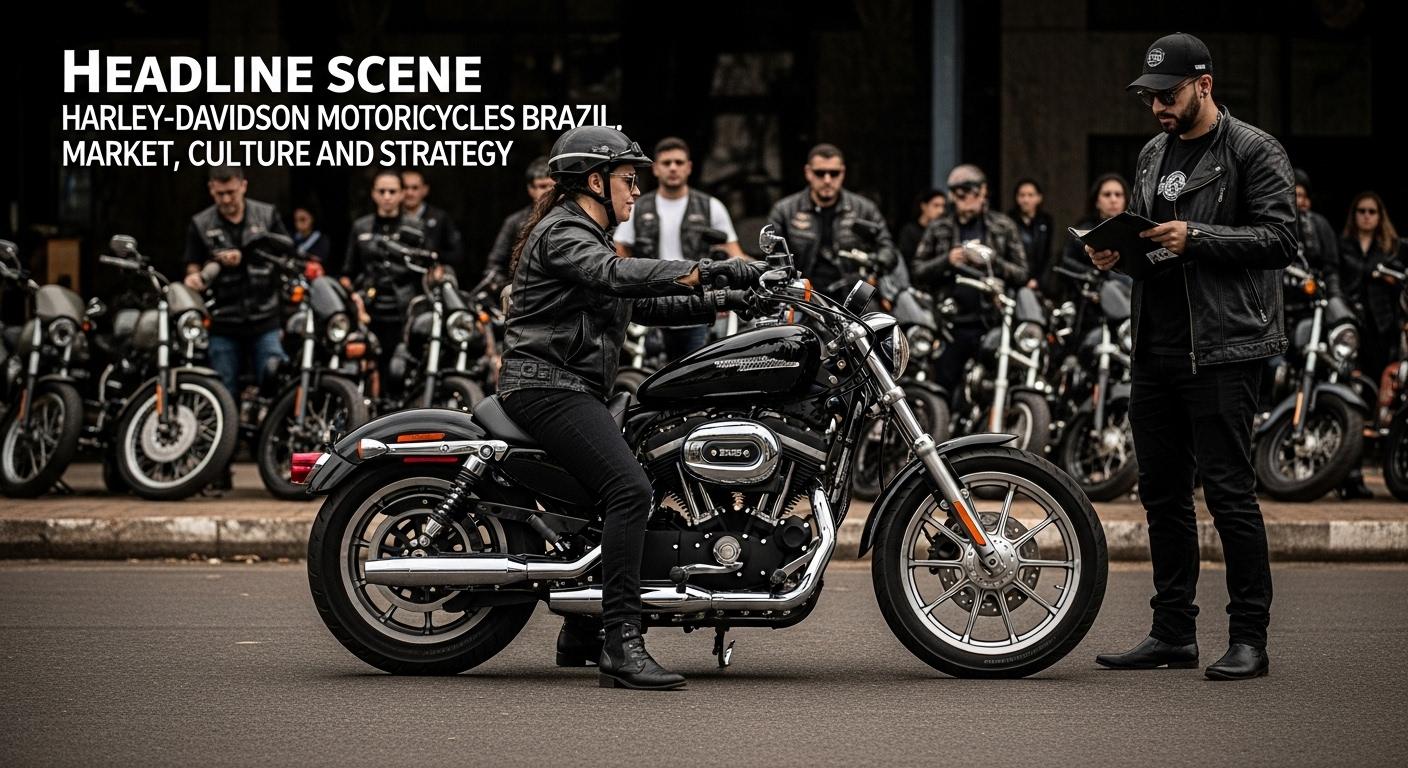
Harley-Davidson motorcycle displayed in a Brazilian urban setting with festive color accents.
Updated: April 9, 2026
In the Brazilian riding landscape, harley-davidson Motorcycles Brazil stands as more than a lineup of bikes; it serves as a lens into how a global heavyweight negotiates a demanding market while preserving identity and lifestyle. This analysis treats the brand as both product and social signal, exploring market dynamics, rider culture, distribution, and regulatory pressures to sketch possible trajectories for dealers, clubs, and customers.
Market landscape and consumer base
The premium two-wheeled segment in Brazil has long hinged on a mix of aspiration, affordability, and local pragmatism. While mass-market motorcycles dominate urban transport, a subset of riders seeks displacement, torque, and the associated social cachet that brands like Harley-Davidson symbolize. In macro terms, the health of the segment hinges on consumer purchasing power, availability of financing, and the cost of importation or local assembly. Brazil’s currency volatility and import-related duties have historically shaped sticker prices, while financing programs—whether offered through banks, dealers, or manufacturer-affiliated schemes—often determine whether a potential buyer opts for a premium model or shifts to alternatives. Against this backdrop, Harley-Davidson confronts the dual challenge of maintaining brand prestige while ensuring access for a growing but still price-sensitive class of riders who value reliability, after-sales service, and a sense of community.
Rider demographics in Brazil show a clear tilt toward urban professionals, executives, and enthusiasts drawn to the mythos of long rides, weekend escapes, and the social rituals that come with belonging to an informal community of riders. The brand’s appeal is reinforced by curated experiences—group rides, club events, and branded gatherings—that translate into word-of-mouth advantages and a higher lifetime value per customer. Yet, this is not a uniform market: preferences vary by region, climate, and road conditions. In several major cities, the blend of luxury and practicality means that buyers often evaluate Harley motorcycles not only on performance but also on service accessibility, maintenance costs, and the reliability of parts supply. In short, the market is nuanced: there is appetite for premium touring motorcycles, but sustained sales depend on economic steadiness and a robust service network that can keep bikes on the road rather than in the showroom.
Brand dynamics and rider identity
Harley-Davidson has long positioned itself as a lifestyle brand, a reputation that travels well in Brazil where motorcycle culture blends heritage, performance, and personal storytelling. The brand’s appeal often rests on a narrative that links the open road, freedom, and a certain masculine iconography, all while offering customization avenues that allow riders to express individuality. Local clubs and informal networks—mirroring the international Harley Owners Group (HOG) ethos—create social proof that extends beyond the showroom. This network effect is critical in a market where social validation and peer recommendations carry disproportionate weight in purchase decisions. As a result, product messaging in Brazil must balance aspirational branding with tangible value propositions—reliability, service availability, and long-term ownership costs—to convert interest into steady demand.
Customization remains a central driver of engagement. Brazilian riders often seek to tailor bikes for comfort on long tours and for urban maneuverability. The ability to customize touches such as exhausts, seating, wind protection, and luggage translates into higher customer satisfaction and stronger word-of-mouth referrals. Harley’s challenge is to keep the customization experience coherent across markets while honoring local preferences and usage patterns. This requires a careful blend of imported engineering and responsive local support that ensures each bike can be tuned to Brazilian roads without compromising on safety or warranty commitments. The result is a brand experience that feels both global and distinctly Brazilian, a balance that influences repurchase rates and the likelihood of riders moving from entry models to deeper product lines over time.
Dealer network and supply chain
Beyond the showroom floor, the sustainability of Harley’s Brazil operation depends on a dependable dealer network and a transparent service ecosystem. In practice, Brazil’s geography, urban density, and regional income disparities shape how dealerships reach customers and how service centers maintain uptime. A robust network reduces downtime for maintenance, which is a particularly important factor for premium bikes that command higher repair costs and longer lead times for replacement parts. The supply chain—whether it relies on imports, locally sourced components, or a blend—also influences pricing and availability. In years of currency volatility, dealers lean on flexible financing, multi-brand service facilities, and extended warranty options to reassure customers that ownership remains predictable even when macroeconomic conditions shift. The net effect is that the health of Harley’s Brazil business increasingly ties to the reliability of after-sales support and the speed at which parts and skilled service can be delivered across cities and regions.
Policy and macro context shaping growth
Public policy, taxation, and macroeconomic trends play a decisive role in Harley’s ability to scale in Brazil. Import duties, tax regimes, and currency fluctuations affect the price of premium motorcycles well beyond sticker costs. Additionally, regulatory requirements around emissions, safety standards, and urban mobility can either constrain or catalyze demand for larger displacement bikes depending on how accommodating the framework is for premium brands and their service models. The interplay of these factors with consumer confidence—driven by employment trends, inflation, and interest rates—helps explain why year-to-year velocity in premium motorcycle sales can be uneven. For Harley, success in this environment hinges on strategic pricing, flexible financing, and an emphasis on the long-term value proposition of ownership, which includes efficient service networks and a resilient brand promise that remains compelling even as external conditions fluctuate.
Future scenarios and strategic considerations
Looking ahead, Harley-Davidson Brazil faces a trio of plausible paths. One scenario emphasizes steady, selective growth in major markets supported by ongoing service improvements and a broadened financing toolkit. A second scenario anticipates intensified competition from global and local players, pressuring margins but potentially expanding the customer base through better entry-point options and more aggressive marketing. A third scenario contemplates a deeper pivot toward electrification or hybrid options in response to global trends and local infrastructure, with the caveat that Brazil’s charging ecosystem and consumer readiness must mature in tandem. In any case, the optimal strategy appears anchored in three pillars: (1) a more localized product and service network that minimizes downtime and costs, (2) community-building and experiential marketing that turns ownership into ongoing social value, and (3) data-driven pricing and financing strategies that align with Brazil’s diverse regional economies while preserving the brand’s premium positioning.
Actionable Takeaways
- Invest in a multi-city service network to reduce repair downtime and preserve ownership experience for premium bikes.
- Leverage Harley Owners Group (HOG)-style activities and local clubs to build authentic community and sustain word-of-mouth growth.
- Expand financing partnerships and flexible payment options to lower upfront barriers for potential buyers.
- Align messaging with urban mobility needs and long-distance touring to broaden appeal across different rider segments.
- Explore local assembly or semi-localized production where feasible to mitigate import costs and currency risk while maintaining quality and warranty integrity.