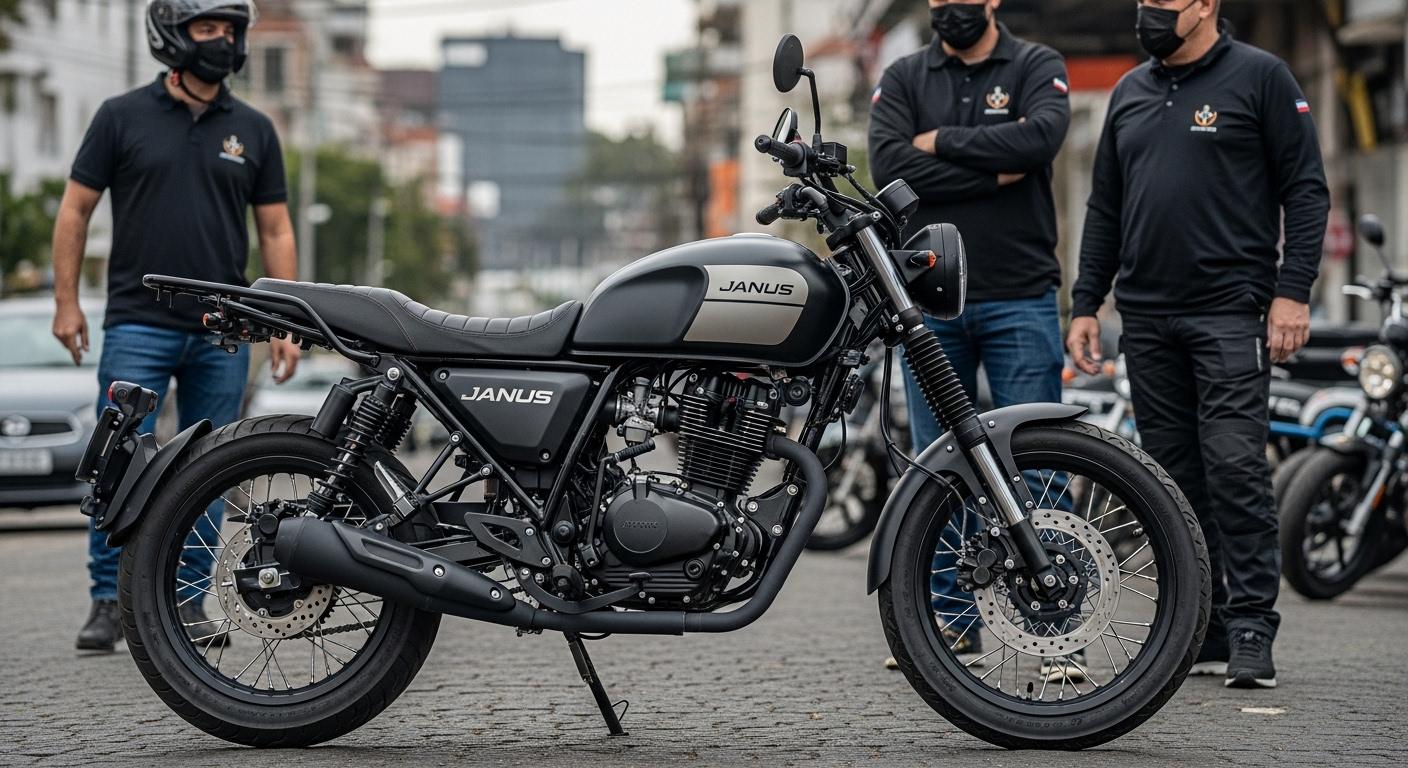
Janus-style retro motorcycle in a Brazilian city street, symbolizing Brazil market entry.
Updated: April 9, 2026
janus Motorcycles Brazil enters a landscape defined by dense urban cores, evolving logistics, and a rider community that blends practicality with a growing appetite for distinctive design. This analysis situates the brand within Brazil’s broader motorcycling ecosystem, asking how policy, distribution, and culture interact to determine whether a boutique entrant can translate concept into sustainable sales and meaningful brand presence.
Janus Motorcycles Brazil: Entry and Market Rationale
Brazil’s urban fabric favors lightweight, economical machines for daily commutes, yet the market remains intensely price-sensitive. A niche player like Janus would need to tailor its proposition to Brazilian realities: simple-to-maintain motorcycles, an accessible service network, and credible warranty support. The practical path to scale usually hinges on partnerships with local distributors or even regional assembly to mitigate import costs and currency risk. A compact, well-priced lineup—likely centered on sub-300cc displacement—could align with prevailing commuter needs while offering a distinct design language that resonates with urban riders who want character without compromising reliability.
Beyond product specification, the brand narrative matters. In Brazil, authenticity and local engagement can compound a product’s appeal; consumers respond to brands that show understanding of maintenance culture, road conditions, and the rhythms of city life. For Janus, a phased approach may work best: pilot in a handful of regions with a lean dealer footprint, paired with a robust after-sales program and clear communication about spare parts availability and service intervals. The takeaway is clear—entry is feasible, but it requires adaptation rather than transplantation of foreign-market playbooks.
Regulatory and Infrastructure Realities in Brazil
Commercial success depends as much on how a motorcycle is integrated into the regulatory and logistical terrain as on the product itself. Brazil’s import framework and tax structure can elevate landed costs, making local assembly or kit-mate options appealing for new brands. The homologation and certification process for motor vehicles adds time and cost, while state and municipal tax regimes for vehicles—such as ICMS and other duties—shape final consumer prices. In addition, distribution infrastructure—port efficiency, last-mile logistics, and the availability of qualified technicians—determines how quickly after-sales confidence can be built. Currency volatility and inflation add another layer of risk that brands must manage through hedging, diversified sourcing, and flexible pricing strategies.
On the road, riders in Brazil benefit from a broad network of independent workshops and a culture of hands-on maintenance. A brand that supports local technicians with training, parts supply, and remote diagnostics can convert this ecosystem from a risk into an advantage. The regulatory climate thus favors entrants who can demonstrate compliance, invest in local capabilities, and deliver consistent service quality across regions—factors that influence both initial acceptance and long-term loyalty.
Competition, Community, and Cultural Fit
The Brazilian motorcycle market features a mix of global players with deep local footprints and a vibrant community of riders who value style, durability, and practical performance. In urban centers, motorcycles are essential for navigating congestion and limited transit alternatives; customers often compare total ownership costs—including maintenance, fuel efficiency, and resell value—across brands. A new entrant must not only offer compelling hardware but also cultivate a community around the brand. Local clubs, meetups, and organized rides can serve as high-leverage channels for feedback, word-of-mouth growth, and rider-driven product improvement. For Janus, building a small but effective dealer network anchored by capable service partners—rather than a large, centralized retail model—could help align with Brazil’s pragmatism and entrepreneurial energy while preserving a distinctive brand voice.
Adoption dynamics will hinge on how the brand positions itself with respect to local preferences. If the design language emphasizes heritage-inspired aesthetics and approachable performance, while the after-sales experience emphasizes reliability and accessibility of parts, Janus could appeal to a subset of urban riders seeking aspirational yet practical motorcycles. The challenge lies in balancing premium branding with the realities of price-conscious buyers, a tension common to many niche manufacturers trying to scale in emerging markets.
Strategic Scenarios and Investment Outlook
Looking ahead, several trajectories seem plausible for 2026–2028, depending on execution, macro conditions, and partner choices.
Best-case scenario: A lean entry that grows through local assembly, a strong service network, and strategic partnerships with regional distributors. In this scenario, Janus gains early referential traction among city-dwelling riders and small-business fleets, while building a footprint in key metropolitan corridors. The brand could leverage Brazil’s youthful demographics and rising credit access to sustain demand growth, supported by affordable financing and a compelling warranty program.
Base-case scenario: Moderate demand expansion driven by gradual brand recognition, stable exchange rates, and incremental improvements to after-sales infrastructure. Janus would likely prioritize a small, scalable dealer network, selective regional launches, and a steady cadence of updates to adapt to local tastes, all while managing cost pressures through localized sourcing.
Cautionary scenario: Regulatory delays, currency fluctuations, or a slower-than-anticipated service-market build-out could constrain growth and push the business to extend timelines for profitability. In this case, Janus would benefit from flexible manufacturing arrangements, a modular product lineup that can accommodate price-driven adjustments, and an emphasis on community-driven marketing to preserve brand equity even if sales volumes lag initial projections.
Actionable Takeaways
- Prioritize local assembly or kit-based production to reduce landed costs and improve price competitiveness.
- Establish a lean, service-centric dealer network with trained technicians and readily available spare parts to boost after-sales confidence.
- Invest in rider-community programs, partnerships with clubs, and organized events to catalyze word-of-mouth and feedback loops.
- Prepare for regulatory complexity by mapping homologation steps, tax implications, and financing options early in the launch plan.
- Implement flexible pricing and financing strategies to address currency risk and varying consumer credit environments across regions.